
Record a conversation. Explain a photograph. Tell the story in your own voice.
Preserve those pieces of your life so they remain available to return to when remembering becomes difficult.
Save more than the image.
Keep who was there, when it happened and what it meant to you. Your own words add context a photograph alone cannot contain.
Reconnect with your recorded life.
We will develop accessible ways to revisit familiar people, places and experiences through the records you have chosen. A selected collection also helps people supporting you understand your life and preferences.
Pursue memory restoration.
Our longer-term work will pursue neural technologies for supporting biological recall, connecting preserved personal history with research into how memories are encoded and retrieved.
The objective is to help people reconnect with experiences they can no longer access unaided. Restoring an autobiographical memory from a recording remains a research goal; preserving the recording does not itself restore that memory inside the brain.
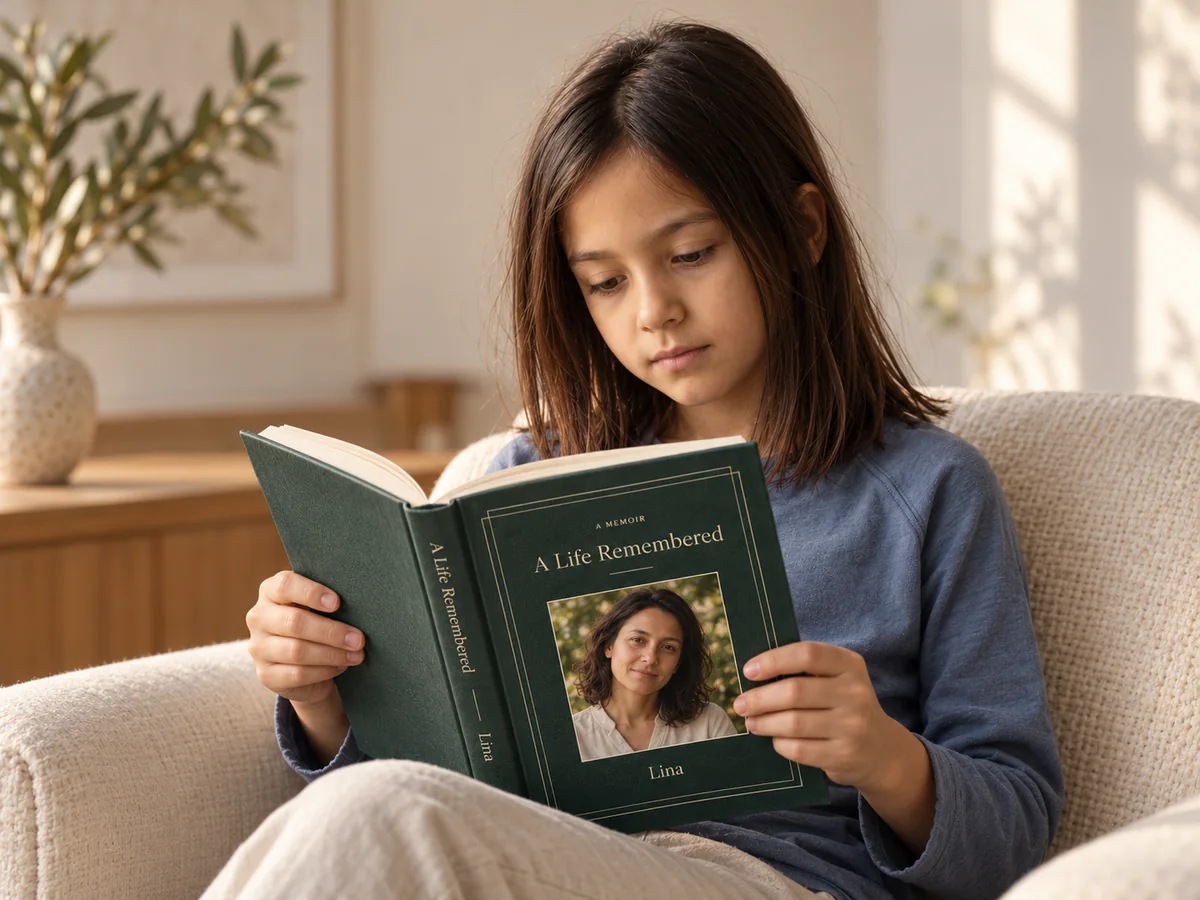
A scene from that future: years after recording a family celebration, Lina returns to her own account of it, with the original voices, names and photographs together. The experience follows her pace and choices.
Preserve the person’s choice.
Choose which memories to revisit and who may help. Support should be gentle, optional and clear about which details came from original records and which were added later.